
Why we are Complementarian
Why tomorrow's Women's Bible & Brunch reflects who we are as Reforming Church, a complementarian church.
Healthy Food for a healthy Household of God: a series of articles and podcasts complementing the sermon series, on the why and how of Reforming.
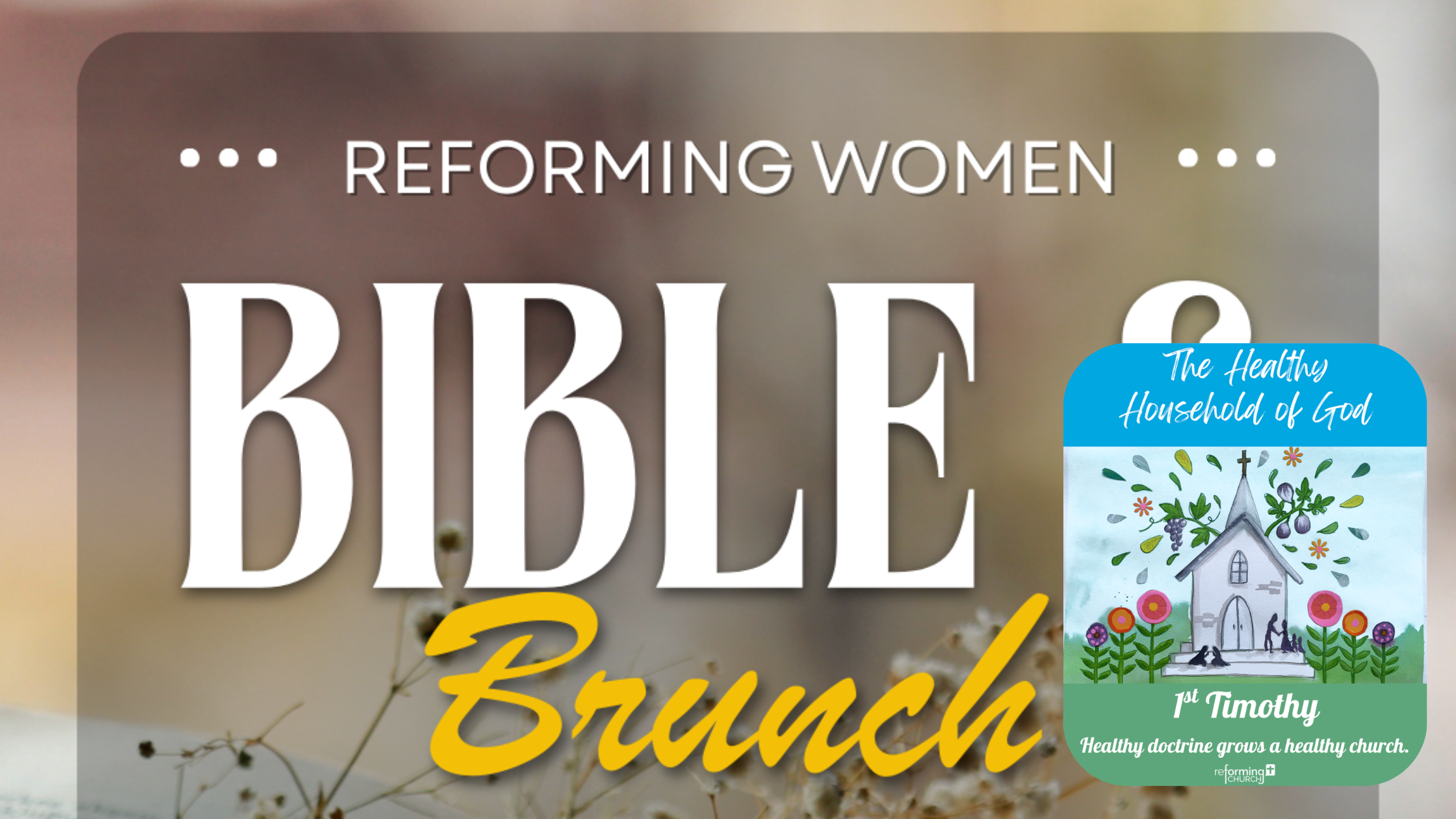
Tomorrow morning at 10am, women of Reforming Church will gather at Reforming House for our Women's Bible & Brunch, studying Romans 8 together with different women teaching and encouraging one another.
For some, an event like this might seem unremarkable—just a nice morning with food and Bible study. But for us, it's a real-life expression of a conviction we hold dear: that God has designed the church, the home, and the relationships within them with beautiful, complementary roles for men and women.
We are a complementarian church. That word can sound technical, even cold to some (and it has been used poorly in some circles), but at its heart it simply means we believe the Bible teaches that men and women are equal in dignity, value, and standing before God. We believe what the Bible teaches, that both made in his image, both recipients of his grace—while also being given distinct callings that reflect God's wise design for flourishing.
Nowhere is this seen more practically than in Titus 2:3-5, where Paul writes to Titus about how the church at Crete should order its life.
‘Older women likewise are to be reverent in behavior, not slanderers or slaves too much wine. They are to teach what is good, and so train the young women to love their husbands and children, to be self-controlled, pure, working at home, kind, and submissive to their own husbands, that the word of God may not be reviled.’
A few things stand out from this passage (if we were to apply the Swedish discovery method to this passage) that shape how we think about events like tomorrow's brunch.
First, teaching and discipleship within the church is not optional for women—it's commanded.
Paul doesn't say older women might teach younger women if they feel like it. He says they are to teach. This is a positive, Spirit-empowered calling given to women in Scripture.
Ministries such as our Bible and Brunch, where different women will be preaching and teaching to women, is a direct outworking of this command. We want the older, more mature women in our congregation—those who have walked further down the road of faith, marriage, motherhood, and life's various seasons—to pour into those coming up behind them.
Second, this teaching has a particular shape and focus.
The content Paul describes—loving husbands and children, self-control, purity, kindness, the management of the home—reflects the particular callings God has given to women, especially in the contexts of marriage and family.
This doesn't mean women's discipleship is reduced to domestic and household topics alone, but it does mean Scripture takes seriously the specific shape of a woman's life and ministry, and sees value in women being equipped for it by those who've walked it before them.
Third, this pattern reinforces—rather than contradicts—our convictions about church leadership and the pulpit.
Some might ask: if women are teaching and preaching to women tomorrow, doesn't that show your "complementarianism" is selective? Not at all.
Titus 2 itself demonstrates the pattern: the teaching envisioned here is women teaching women, within the context of the local church's life, under the oversight of the elders. This sits alongside other passages we’ll look at this Sunday (such as 1 Timothy 2:11-12 and 1 Timothy 3) which reserve the office of elder—and the authoritative teaching of the gathered congregation—for qualified men.
Complementarianism isn't "women don't teach”, it is "God has ordered teaching roles within the church with wisdom, giving women a vital and explicitly commanded ministry to other women, while reserving the eldership and teaching and exercising godly authority (preaching in the church) for men."
Fourth, the stated purpose of this teaching matters.
Paul says all this is ‘that the word of God may not be reviled.’
In other words, how God's people live—including how women live out their callings with self-control, kindness, and faithfulness—is itself a witness to the watching world.
Far from being a marginal or embarrassing topic, the way our women love their families, manage their homes, and care for one another speaks loudly about the character of the gospel we proclaim.
So when you see an event like the Women's Bible & Brunch on the calendar, I hope (as your Pastor) that you'll see more than just a nice morning together. For what you'll see is a congregation trying, in a real way, to grow in God's word—valuing women highly, equipping them thoroughly, and trusting that God's design for his church, lived out faithfully, really is for our good and for His glory.
If you're a woman at Reforming Church, then I think it will be a blessing for you to be there tomorrow at 10am at Reforming House. Bring a plate to share, your Bible, and an open heart as you study Romans 8 together with other women of Reforming.
